Care Guide
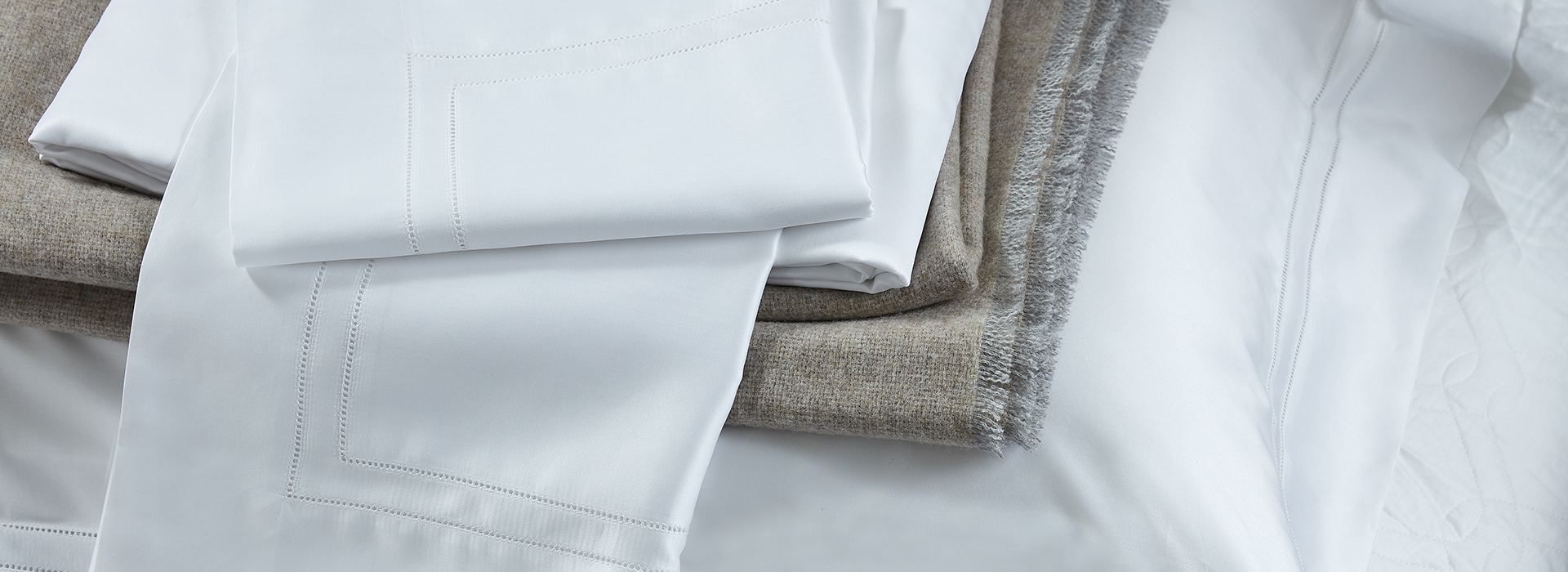
Our products are made with the best natural materials and with the finest craftsmanship. Regular cleaning and maintenance can ensure the longevity of your linens, keeping them in pristine condition for years to come. Please consult the care instructions below, as well as the care labels on your products, for best results.
Pre-wash
- It is recommended to wash your new linens prior to usage. A pre-wash removes the layer of starch and makes the fibers more breathable. It also shrinks your linens down to the intended size.
Washing
- Please separate according to color and fabric material, as well as product type before washing. Use the appropriate settings as recommended by the care labels to achieve the best results.
- Avoid washing linens with articles containing synthetic materials (such as polyester), as well as garments with components (such as zippers and hooks) to prevent damage to products.
- Cotton and linen beddings should be washed every 7~10 days to prolong the product’s lifespan.
- For best results, flip sheets, pillow cases, and duvet covers inside out and place them within laundry bags before washing. It is especially recommended to wash products with lacing and embroidery within laundry bags.
- It is recommended to wash each set of beddings separately. Washing multiple sets of beddings together and overloading the washing drum subjects the products to additional wear and tear.
- Remove linens from the washing machine as soon as the washing cycle is complete to prevent wrinkling. Air dry the linens naturally.
- Avoid soaking fabrics in detergent long term, as this could damage the fiber structure of the fabrics. It can also promote the growth of bacteria, which may cause unpleasant odors. Additionally, soaking long term may also accelerate the fading of colors on your linens.
Detergent
- Use neutral detergents. If using powdered detergent, make sure it is properly mixed and dissolved into water first. Do not let undiluted washing powder or detergent come in direct contact with your linens. Do not use bleach, fabric brighteners, or fabric softeners. Bleach damages the textiles and leads to decoloration.
Drying
- To preserve the coloring of the linens and other fabrics, avoid long-term exposure to direct sunlight which can cause discoloration and yellowing.
- Shake out your bed linens throughly before hanging to dry to avoid creasing.
- It is recommended to not machine dry your products. If the care label indicates that the product can be machine dried, use the lowest temperature settings available.
Ironing
- Please refer to the care label for the appropriate temperatures when ironing your product. It is typically recommended to use medium to high temperature settings when ironing cotton and linen fabrics, and low to medium temperature settings when ironing silk and wool fabrics.
- For fabrics with prints, embroidery, or lace, please flip them inside out before ironing. Additionally, place a layer of cloth in between to insulate the fabric and to prevent direct contact with the iron. Use the lowest temperature settings.
- For best results, use steam when ironing cotton fabrics and iron hemp fabrics while slightly damp.
- It is important to keep your steam iron clean, as mineral deposits could stain your fabrics.
Dry Cleaning
- For beddings made of fine fibers such as silk, wool, and cashmere, it is important to select a professional dry cleaner with experience in cleaning luxury beddings and fine fibers.
Storage
- After proper cleaning and drying, store bedding in a cool, dry, and well-ventilated environment in order to avoid mold growth or odors.
- To allow for proper ventilation of natural fibers, it is recommended to avoid storing your beddings in plastic bags or containers.
- Avoid storing your beddings in a location exposed to sunlight, as it could lead to discoloration and yellowing.

Copyright 2026 KUAN All rights reserved